

Tyres
Here you will find summer, winter and all-season tyres. Start with the correct size, then make sure the load index and speed rating meet your car's requirements, and choose the type that suits how and where you drive. The sections below explain the sidewall markings and the EU tyre label. Read the guide
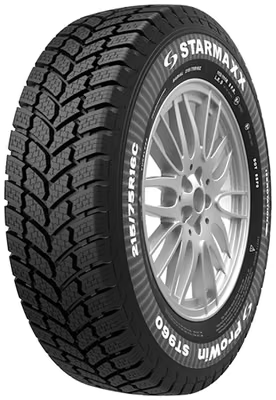


 M+S
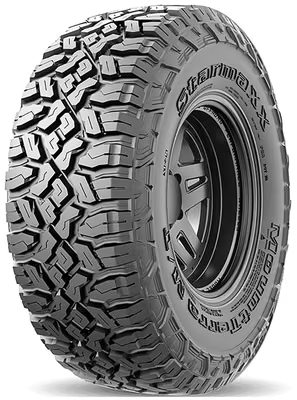

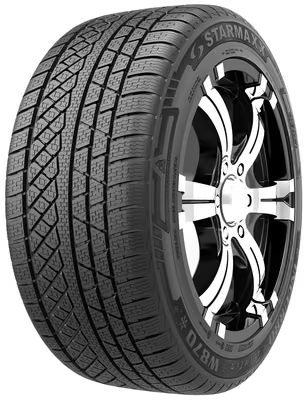 M+S
M+S
 M+S
M+S
M+S
M+S
M+S
M+S
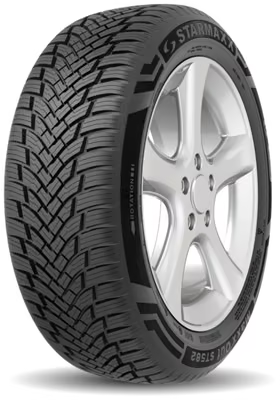 M+S
M+S
M+S
M+S
M+S
M+S
 M+S
 M+S
 M+S
M+S
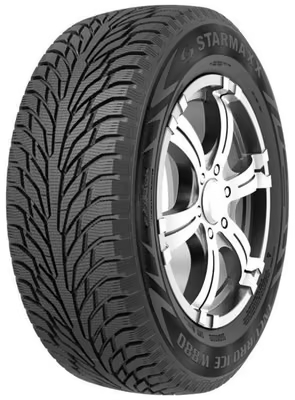 M+S
M+S
Summer, winter or all-season?
Polish law does not require drivers to switch between summer and winter tyres, so the decision is yours. Many drivers keep two sets: summer tyres for the warm months, when grip on dry and rain-soaked tarmac matters most, and winter tyres, whose softer compound keeps working in the cold, on snow and in slush. All-season tyres suit low-mileage drivers who stay mostly in town. For timing, see our guide to changing tyres in Poland.
Decoding the sidewall
Take 205/55 R16 91H as an example:
- 205 is the section width in millimetres;
- 55 is the aspect ratio: the sidewall height is 55% of the section width;
- R stands for radial construction;
- 16 is the rim diameter in inches;
- 91 is the load index – a maximum of 615 kg per tyre;
- H is the speed rating – up to 210 km/h.
The other construction letters (B, D and ZR) are explained in our guide to tyre construction markings, and the XL, HL and C markings in our article on load ratings. Polish technical rules require a tyre's load capacity to suit the wheel load and, as a rule, the tyre to be suitable for the vehicle's top speed.
Reading the EU label
Most new car and van tyres sold in the EU come with a label. Three ratings help you compare them:
- Fuel efficiency, graded A to E, reflects rolling resistance and therefore fuel use or the range of an electric car.
- Wet grip, graded A to E, shows braking performance on wet roads – class A tyres stop in the shortest distance.
- External noise is given in decibels, together with a class from A to C.
Where it applies, the label also carries the snow grip (3PMSF) pictogram, which only tyres that have passed the UN Regulation No. 117 snow test may show, and the ice grip pictogram, intended for tyres designed for Nordic winters.
Which size does my car need?
Check the tyres you are driving on now – the size is printed on the sidewall. Alternatively, use the ‘By vehicle’ search on the home page: pick the make, model and year, and you will see matching sizes, with the factory ones marked OEM. Because one model is often homologated with several wheel and tyre combinations, compare the result with what is actually on your car. While you are looking at the sidewall, check the DOT code as well – our guide to tyre age explains how to read it.